Be yourself; Everyone else is already taken.
— Oscar Wilde.
This is the first post on my new blog. I’m just getting this new blog going, so stay tuned for more. Subscribe below to get notified when I post new updates.
Be yourself; Everyone else is already taken.
— Oscar Wilde.
This is the first post on my new blog. I’m just getting this new blog going, so stay tuned for more. Subscribe below to get notified when I post new updates.
There are various kinds of asphalt mixing plants available these days. It is paramount to understand each sort, its characteristics, pros and cons, composition, and other details to pick one as per your construction demands.
Here is the classification of asphalt mixing plants based on their production capacity, mobility, and technical processes.
Based on Production Capacity
There are different asphalt mixing plant suppliers that have small and medium asphalt plants that are generally used for smaller construction engineering. Asphalt mixing plants of a capacity between 20 TPH to 100 TPH are considered as small asphalt mixing plants. They are usually used for the construction of roads, parking lots, and a few other small-scale constructions.
Several asphalt plant manufacturers have a large range of asphalt plant models with different capacities. Large asphalt mixing plants are appropriate for construction undertakings that require a significant amount of hot mix asphalt. They are generally operated for construction in metropolitan areas. They may have a capacity of 100 TPH or even more.
Based on the Mobility
The plant that cannot move around during the construction process or is fixed at a specific spot is called a stationary asphalt plant. Thus, transportation equipment is required to transport the asphalt mixture produced in the plant.
The plants and equipment that are mounted on a chassis that moves around with the vehicle are called mobile asphalt mixing plants. This makes the transportation of the mixture very easy and saves time too. This is a reason why mobile asphalt mix plants are favored over stationary asphalt plants because of their movable aspect.
Based on the Technical Process
Asphalt plants favoured for uninterrupted production of asphalt mixture are drum mix plants, as they can produce asphalt mixture steadily with no interruptions. They are capable of incorporating the drying and asphalt mixing process simultaneously at a relatively lower cost. That is why large construction sites prefer continuous asphalt plants.
The highest quality of asphalt mixture is produced by the asphalt batch mix plants, and they are widely used for construction projects around the globe. Projects that demand the specifications of the mixture to be changed during the process prefer to use this kind of asphalt plant.
Caterpiller Inc. or commonly known as CAT is the world’s leading manufacturer of construction and mining equipment, but the most popular one is their excavator machines. Caterpillar excavators are designed to give you the confidence to complete any given excavating task. They are competent to complete a variety of operations, including digging, demolition works, material handling, heavy lifts, forestry tasks, and a lot of other different kinds of heavy-duty tasks.
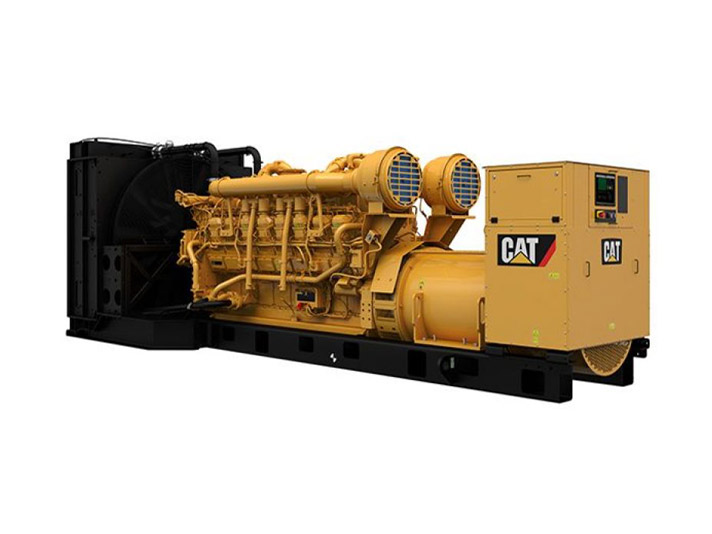
Gainwell India is the leading supplier of CAT Diesel generators in India, known for its high efficient, reliable and eco-friendly range of dg sets.
The construction sector has long been one of the most dynamic in the business world since organisations and job sites are constantly on the lookout for high-quality resources to help them run efficiently, which mostly comprises materials and labour. Resources and machinery relocate to the project site particularly to do a certain set of activities that cannot be completed satisfactorily by human labour. Earthmoving and handling of materials are the two main kinds of construction machinery nowadays. Both types of machinery are employed across the board in the construction sector, particularly during large-scale projects. We’ll look at what equipment falls into each category in more detail below.
Earthmoving equipment: Earthmoving equipment is large machinery, usually large trucks, that is used in building projects involving earthworks. They’re used to moving a lot of dirt, excavating bases for planting, and other things. Large trucks, heavy pieces of machinery, heavy machinery, engineering equipment, heavy vehicles, and large hydraulics are all terms used to describe earthmoving equipment. Hydraulic drives are a significant source of propulsion for most earthmoving construction equipment. Some of the equipment that falls under the Earthmoving category are
Material handling equipment: Materials handling equipment is mechanical equipment that is used to move, store, manage, and protect items and materials during the manufacture, distribution, consumption, and disposal cycle activities. Numerous materials handling equipment is used in nearly every single sector today. Foodservice, automotive, architecture and architecture, consumer goods, utilities, medicines and healthcare, retail and e-commerce, industrial and commodities handling, pharmaceuticals, polymers, and paper, as well as storage and distribution, are among these industries. Some of the equipment that falls under the Material handling category are:
It is critical for construction project contractors to understand that while their employees are working, operating, repairing, or maintaining equipment, the risk of injury is very high. To address this problem, companies must formulate and implement a safety policy that will assist their management and operational staff in avoiding such hazards. While the machinery is operating on the construction site, it is critical that all personnel who are in close proximity to the machine be entirely aware and recognise that a possible risk exists. One of the most important components that will assist operators to stay safe is personal protective equipment (PPE). It consists of hi-vis jackets, hi-vis safety vests, hi-vis shirts, and hi-vis rainwear, all of which should be worn at all times on any construction site.
The diesel generator has been re-invented and improved extensively since its invention in order to increase its performance and reliability while expanding its range of uses. Diesel generators, which provide reserve or standby power to buildings and systems in the event of a power outage, are one of the most common uses today. Modern diesel generators are built to continually detect electric charge, instantly starting when there is a power outage and shutting off when the utility connection is restored.
Generators are an essential feature of any house or business that needs energy on a regular basis. Gale force winds, severe thunderstorms, or ice accumulation that prompts overhead power lines to fall are all common reasons for power failures. Despite the fact that power employees work all around the clock to overcome this shortcoming, it might take several days for the power to be restored in some cases. That’s why, in the sudden power loss, every family must have a generator on standby to power electrical items. It’s not only about ease; it’s also about protection and wellbeing.
Gainwell India comes with its own range of diesel generators which promises to make your life easier. Whether you are looking for dg set, dg generator, dg set in india, diesel generator set in india, Gainwell is the way to go. Having a diesel generator adds up to many benefits. The following are the key advantages of diesel generators:
Gainwell India, authorized dealer of CAT Heavy Earth Moving machinery offers some of the best products & technologies in the infrastructure sector.
From trucks to loaders, there are so many different types of machinery and equipment that are used at construction sites and all of them have different uses. It is important to understand the uses and benefits of each of these types of machinery before investing in them. Construction can be a tedious task and a hassle but if done the right way with the right equipment, it can go on very easily without the stress of buying things again and again. Here are some heavy earth moving equipment that is important and their benefits:
1. Excavators: Excavators are necessary equipment as it does a lot of heavy lifting and digging work. They are one of the widely used heavy construction machinery. Its main job is to excavate large areas and dig up and dump the dirt. In some cases, the excavators can also be used for demolition of old construction sites, moving and loading materials from one place to another. Due to its 360 degree movability, it makes the job of excavating and dumping soil very easy.
2. Bulldozers: Bulldozers are yet again another widely used heavy construction machinery. They have large metal blades on the front. Those blades are very effective for pushing soil and dirt and other materials present. Bulldozers are somewhat similar to excavators but their job is to just push around the dirt collected out of the excavation. These are extremely powerful machines and are widely used in road construction, land clearing, and mining sites.
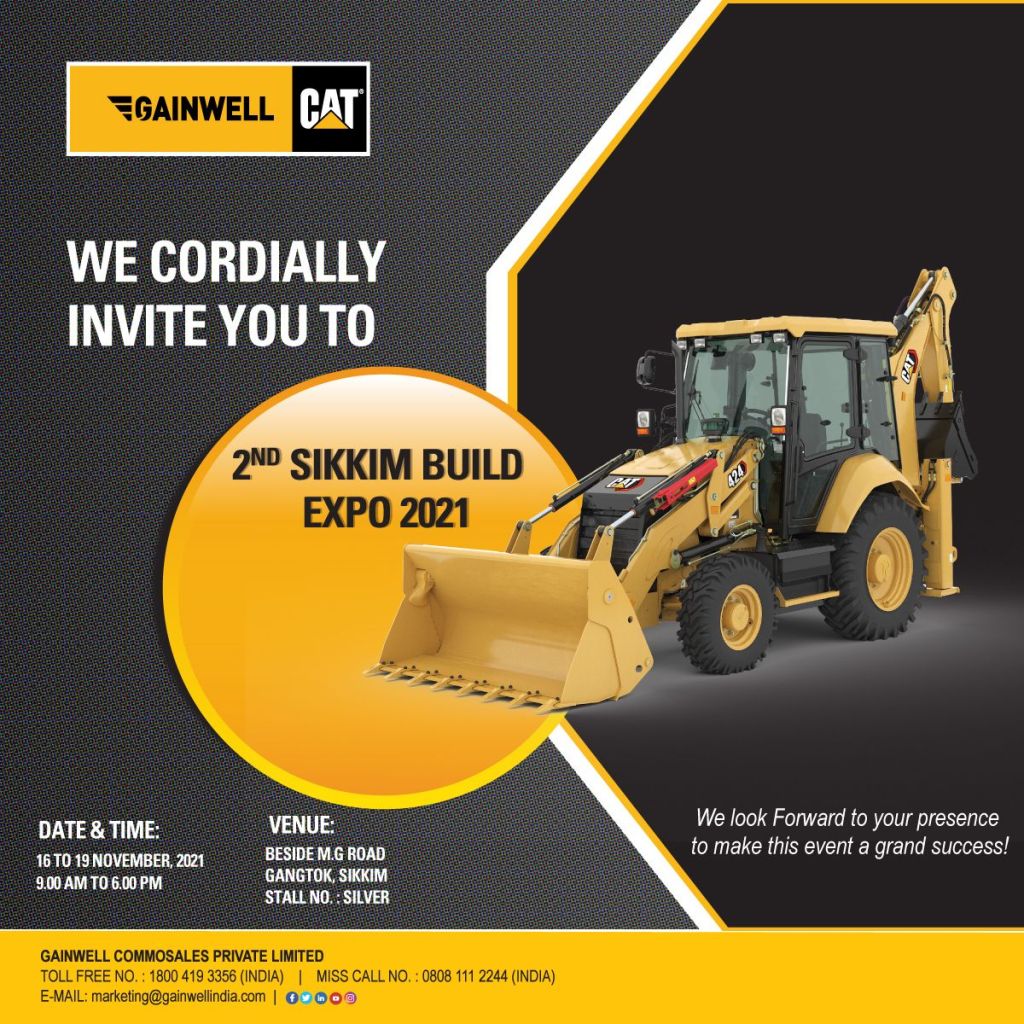
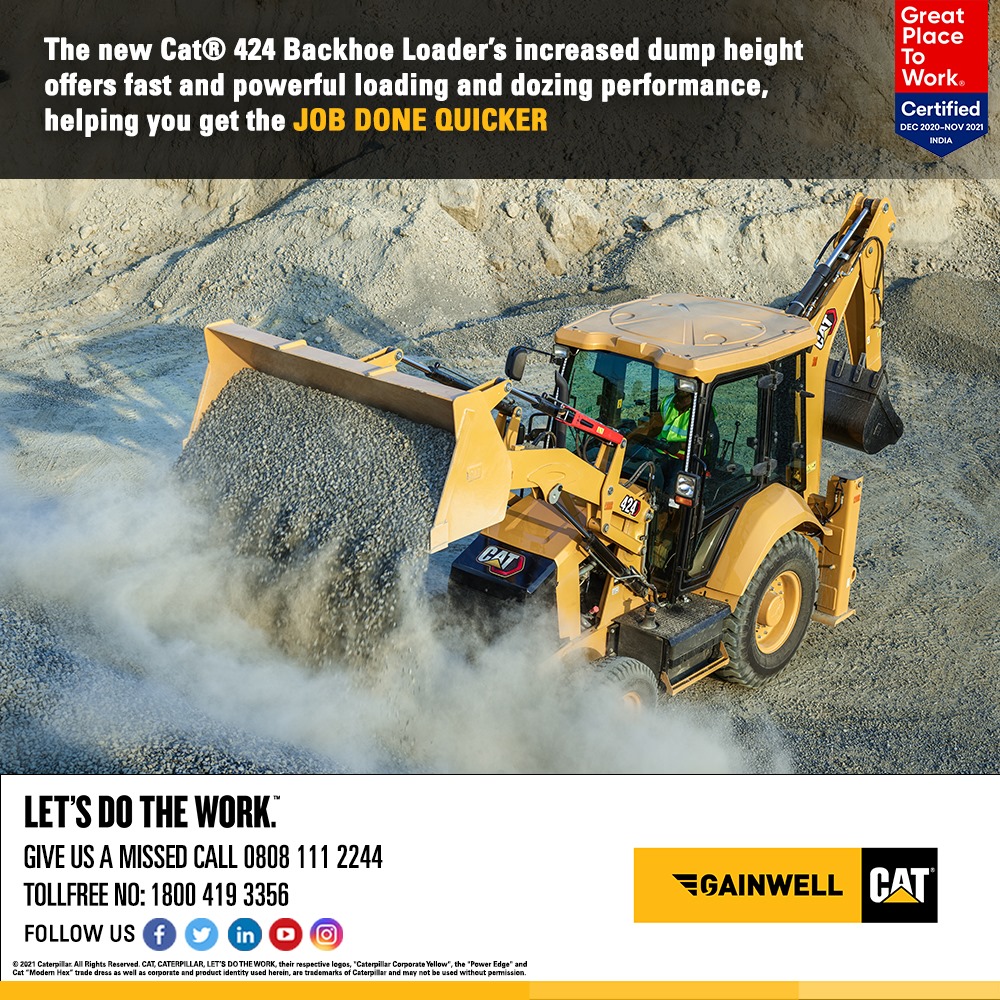
3. Backhoe loaders: One of the most versatile heavy construction machinery that is found is backhoe loaders. These are multi-tasking machinery that can not only help in digging and excavating soil and dirt but also with the presence of the bucket in front, it can hold up a lot of stuff and helps with easy moving of rocks, stones, and dirt from one place to another. Although it cannot hold as much as an excavator, its compact nature and easy mobility and versatility make it one of the important machinery at construction sites.
4. Dump trucks: Where would one carry loads and loads of construction material from one place to another? Well, that is where the dump trucks come in handy. It helps in depositing material wherever it is needed. The pivot between the cabin and the truck bed helps in dumping stuff easily even on uneven surfaces.
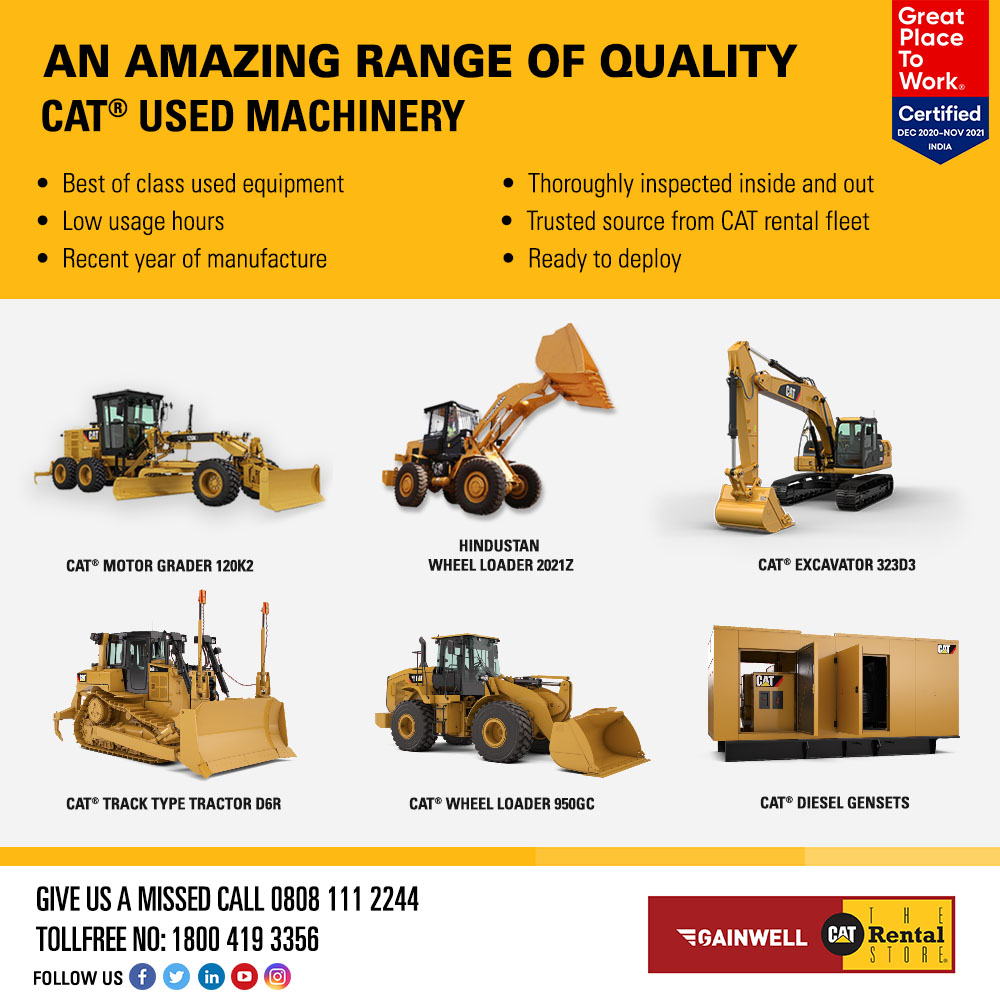
Gainwell offers a wide range of CAT quarry and construction machines in India. Find track type tractor, hydraulic excavator, backhoe loaders and many more.
A wheel loader is generally a front-mounted bucket designed to scoop, hold and transport loosely packed materials, such as sand, dirt, and pulverized minerals. This machine may also be called a skip loader, scoop loader, or even a bucket loader.
Wheel Loaders work with the aid of a mechanized lift-arm that moves that bucket higher or lower, depending on the needs and inputs of the operator. It can be categorized among one of four classes depending on the carrying capacity of the front-mounted bucket and the engine horsepower, These classes are usually referred to as compact, small horsepower, medium horsepower, and large horsepower.
They are used to complete tasks in virtually any industry that deals with heavy loads. Logging, carpentry, construction, quarrying, and demolition are just a few of the many sectors that may rely on wheel loaders for daily work.
In the construction industry, wheel loaders are an excellent tool for removing debris and waste from a building site. From soil to sand to bricks and stones, the loader facilitates countless processes in material transportation and excess material removal.
Much like a crane or a pulley, a wheel loader can be used for many purposes outside of its obvious applications. With an appropriate attachment, this heavy machinery may work just as well as a skid steer in picking up and transporting pipes, in carrying and removing trash or transferring build materials quickly and efficiently with the dump of a large bucket.
Its practical uses may be extended to the farming industry. Indeed, agricultural equipment is one of the largest and most versatile areas of heavy-duty machinery, and for good reason; there are a great number of tasks that go into the operation of a farm and the crops and livestock it supports. Wheel loaders make a fantastic resource for moving hay bales, carrying feed, and removing animal waste or heavy loads of soil. And as in construction, a single attachment can further diversify the applications of a wheel loader, broadening its functionality to include land clearing, tilling, and planting.
Gainwell India is the leading provider of high quality heavy construction equipment’s in India. Explore our inventory of wheel loaders today!
Explore the most versatile range of heavy earth moving equipment in India at Gainwell, the leading authorized dealer of CAT Backhoe loader in India.
Have a WordPress.com account? Log in now.